
Exploring the effects of spaceflight hazards on health and behavior
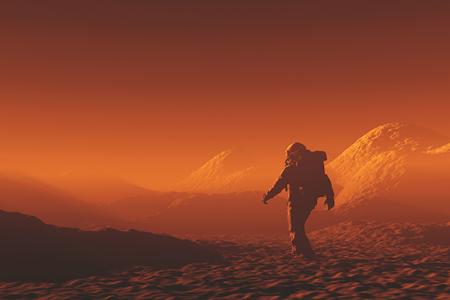
The National Aeronautics and Space Administration (NASA) is preparing to land humans on Mars by 2039. Unlike previous space missions, the Mars mission is expected to last 18 months or more.
There are three inescapable environmental stressors, which can harm their health and performance, that astronauts must face:
- Microgravity
- Space radiation (SR)
- Social isolation
By understanding these challenges, scientists can develop ways to reduce their impact and improve the chances of a successful mission.
Since astronauts will need to be highly self-sufficient and deal with long communication delays, they’ll have to rely more on their own decision-making. Mission success will depend on their ability to quickly and creatively solve unexpected problems and put solutions into action.
CINID researchers are at the forefront of establishing the impact that space radiation has on higher-level thinking processes required to complete the mission. Recent research finds that broken, or fragmented, sleep -- a common problem for astronauts -- can harm complex thinking even more after exposure to space radiation.
Ongoing CINID studies are finding the ways microgravity, social isolation and space radiation can affect behavior, sleep, and inflammation and the transmission of information in the nervous system.